


Level 3: Major Incident Readiness & Tactical Skills – Church Emergency Response
Level 3 represents the pinnacle of church emergency preparedness training, addressing the most serious threats that faith communities may face. This advanced module equips security teams, leadership, and select volunteers with tactical skills necessary to respond to active threats, manage mass casualties, and coordinate complex emergency operations until professional responders assume control.
Understanding Major Incident Scenarios
Major incidents in church settings typically involve active threats with weapons, including firearms and edged weapons. Statistical analysis of faith-based attacks demonstrates that response time during the first three to five minutes determines casualty outcomes. Churches implementing comprehensive Level 3 protocols significantly reduce both response time and casualty severity compared to facilities relying solely on external emergency services.
The unique architectural characteristics of most churches: open sanctuaries, multiple entry points, and large gathering spaces: create specific tactical challenges that require specialized response protocols. Unlike secular venues, churches maintain an atmosphere of openness and welcome that can conflict with security imperatives, necessitating balanced approaches that preserve community values while ensuring protection.
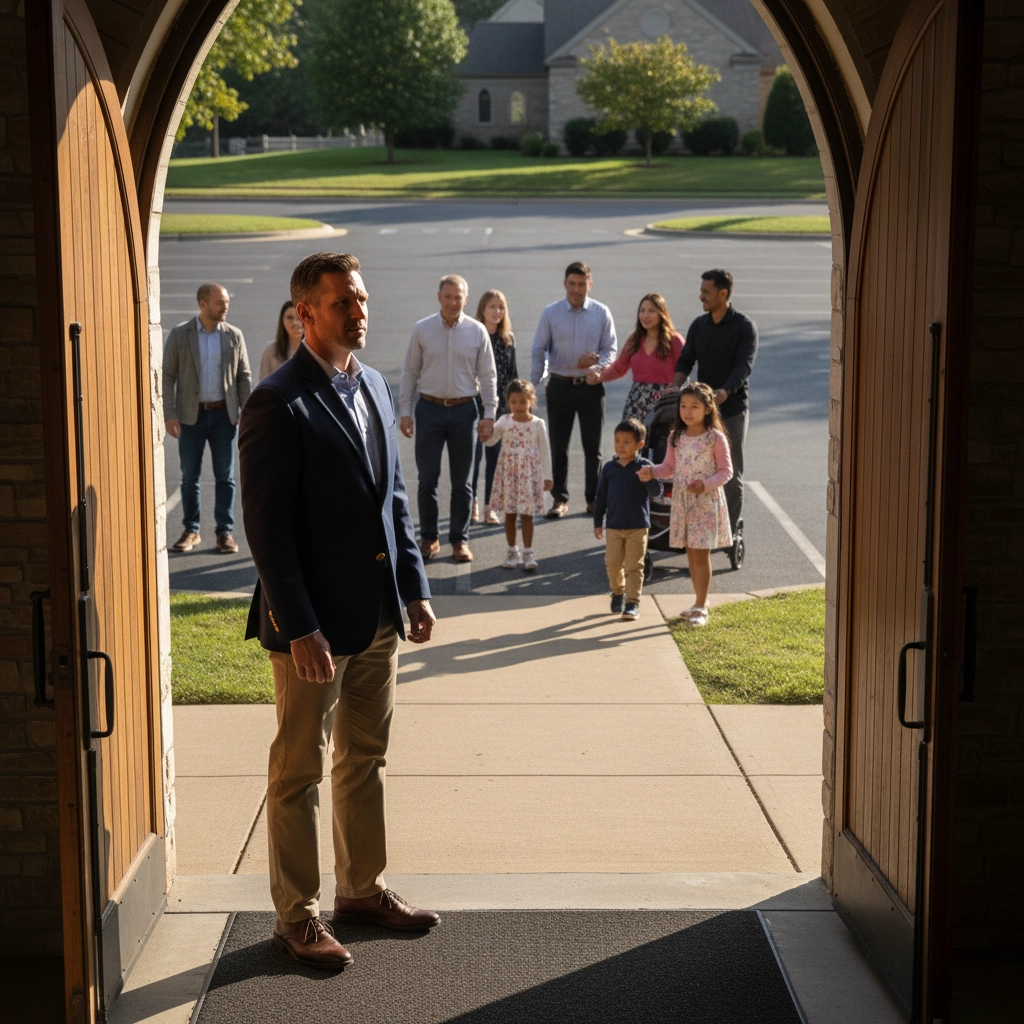
Active Threat Recognition and Immediate Response
Effective threat recognition begins with understanding behavioral indicators that precede violent actions. Trained security personnel learn to identify pre-attack behaviors including reconnaissance activities, unusual interest in security measures, and agitation patterns that often manifest before an incident escalates.
Early Warning Systems
Churches implementing Level 3 protocols establish discrete communication systems allowing security team members to alert each other without creating panic. Modern systems utilize silent alarms, coded verbal cues, and smartphone applications designed specifically for emergency notification. Team members positioned at entry points, parking areas, and throughout the sanctuary maintain constant situational awareness and communication readiness.
Immediate Action Drills
Upon threat identification, security teams execute rehearsed immediate action drills. These protocols include threat assessment, notification procedures, and initial containment measures. Teams trained in Level 3 protocols understand the critical difference between concealment and cover, utilizing church architecture effectively to protect civilians while maintaining tactical advantage.
The "Run, Hide, Fight" paradigm requires modification in church settings where shepherding responsibilities override personal safety considerations. Church security teams learn enhanced decision-making frameworks that account for congregational protection responsibilities while maintaining tactical effectiveness.
Armed Response Protocols
Churches with armed security teams require comprehensive training in threat engagement protocols that account for civilian proximity, architectural limitations, and legal considerations specific to places of worship.
Rules of Engagement
Armed response protocols establish clear criteria for weapon deployment, emphasizing de-escalation when possible while maintaining readiness for immediate defensive action. Security team members learn threat assessment methodologies that distinguish between various threat levels and appropriate responses for each scenario.
Tactical Positioning and Movement
Church security personnel train in tactical movement within sanctuary environments, understanding sight lines, backstop considerations, and civilian evacuation routes. Unlike law enforcement operations, church security teams operate with intimate knowledge of their environment and congregation, allowing for enhanced tactical planning and execution.
Coordination Between Armed Responders
Multiple armed responders require coordination protocols preventing crossfire incidents and ensuring unified tactical approach. Communication procedures, identification methods, and command structure protocols ensure effective teamwork during high-stress situations.
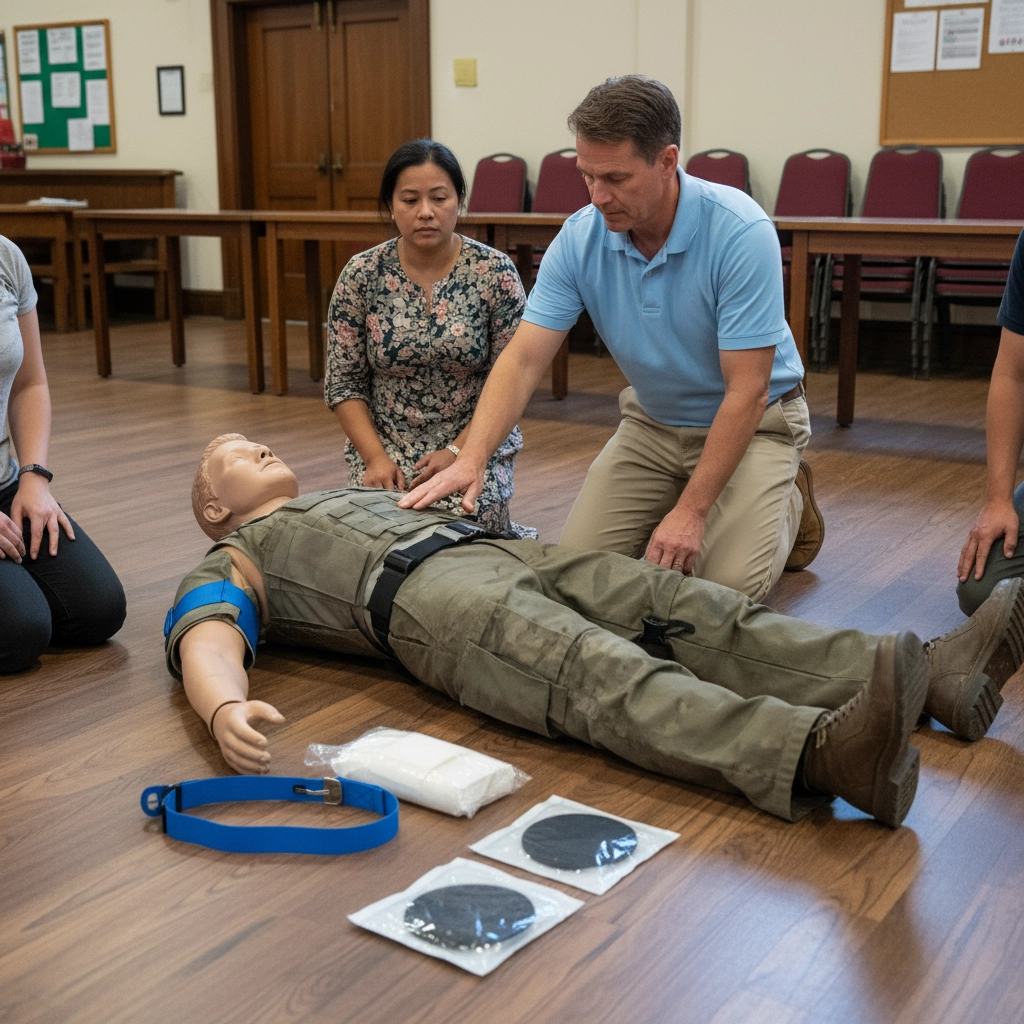
Immediate Medical Intervention
The initial minutes following a violent incident determine survival rates for wounded individuals. Church security teams train in tactical emergency casualty care (TECC) protocols, emphasizing immediate life-saving interventions that can be performed under ongoing threat conditions.
Hemorrhage Control Techniques
Massive hemorrhage remains the leading cause of preventable death in traumatic incidents. Security team members learn rapid tourniquet application, pressure dressing techniques, and hemostatic agent utilization. Training emphasizes single-handed application methods that allow the responder to maintain weapon readiness while providing medical care.
Airway Management Under Fire
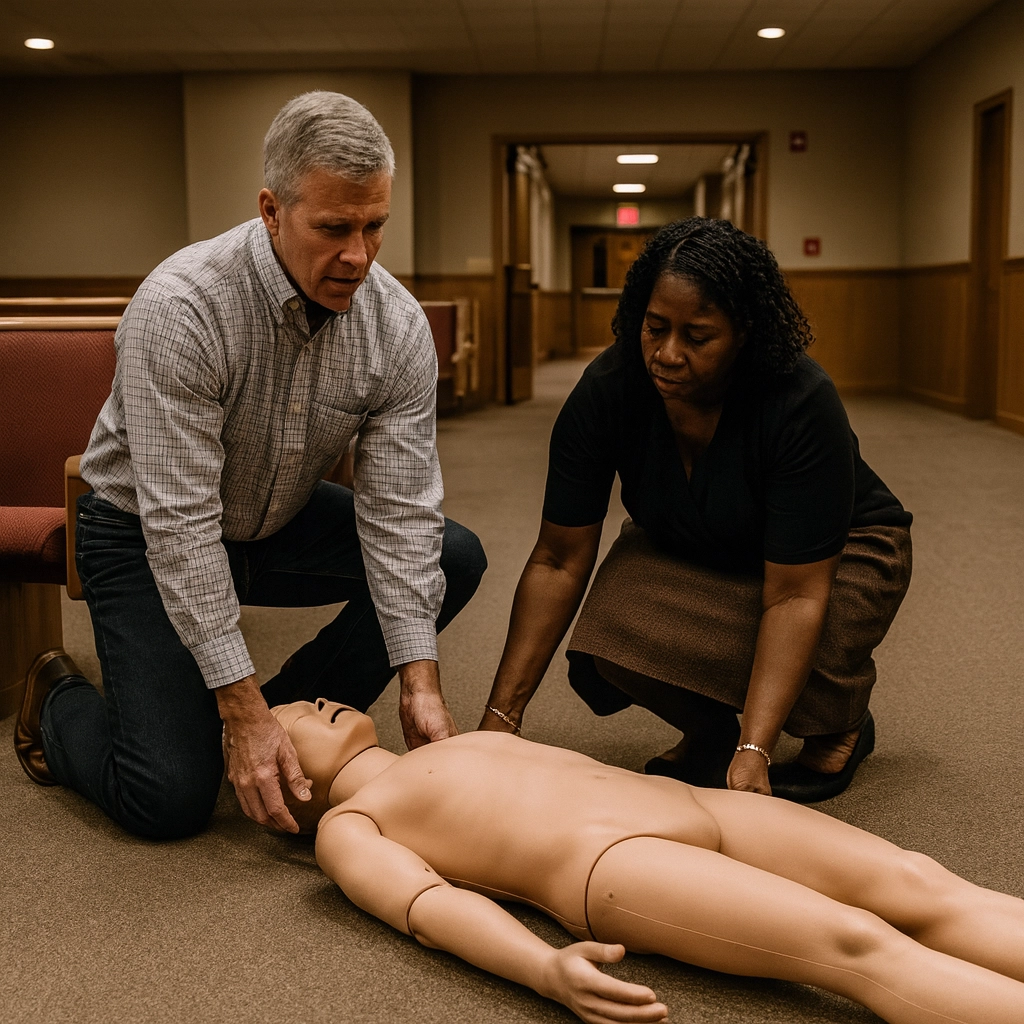
Airway obstruction in unconscious casualties requires immediate intervention. Security personnel train in basic airway positioning, obstruction clearance, and recovery position placement. These skills prove critical during the "care under fire" phase when medical attention must be provided while threat neutralization continues.
Medical Equipment Positioning
Strategic placement of medical supplies throughout church facilities ensures rapid access during emergencies. Individual first aid kits (IFAKs) carried by security team members contain tourniquets, pressure dressings, chest seals, and airway adjuncts specifically selected for penetrating trauma treatment.
Evacuation Management
Mass evacuation from church facilities requires systematic approach balancing speed with safety. Level 3 training addresses crowd psychology, route management, and special population considerations.
Crowd Control Psychology
Understanding crowd dynamics during crisis situations enables security teams to manage evacuation effectively. Training covers voice commands, physical positioning, and psychological techniques that encourage orderly movement while preventing stampede conditions.
Route Management
Primary and secondary evacuation routes require advance planning considering normal occupancy patterns, mobility limitations, and potential route compromise during active incidents. Security teams learn dynamic route selection based on threat location and facility conditions.
Special Population Protocols
Churches serving elderly populations, families with young children, or individuals with disabilities require modified evacuation procedures. Security personnel train in assistance techniques, communication methods, and priority sequencing ensuring no population segments are overlooked during crisis evacuation.
Scene Security and Control
Maintaining scene security during active incidents requires understanding of perimeter establishment, access control, and evidence preservation while prioritizing life safety operations.
Perimeter Establishment
Initial responders establish inner and outer perimeters isolating the incident area while maintaining tactical flexibility. Church security teams learn perimeter selection criteria, communication requirements, and handover procedures for arriving law enforcement personnel.
Access Control
Managing access to secured areas prevents interference with tactical operations while ensuring emergency responder access. Security teams establish controlled entry points with identification verification and coordination with incident command structure.
Evidence Considerations
While life safety remains the primary concern, security teams receive training in evidence preservation techniques that support subsequent investigation without compromising immediate response effectiveness. Understanding forensic considerations helps teams make informed decisions during rapidly evolving situations.
Coordination with Emergency Services
Effective coordination with law enforcement, fire department, and emergency medical services requires understanding of incident command structure, communication protocols, and information requirements.
Law Enforcement Coordination
Church security teams must clearly identify themselves to arriving officers while providing tactical information about ongoing situations. Training covers officer identification methods, information transfer protocols, and transition procedures transferring incident control to law enforcement personnel.
Fire Department Integration
Fire department response often includes emergency medical services and specialized rescue capabilities. Security teams learn coordination procedures ensuring fire department access while maintaining tactical security of treatment areas.
Emergency Medical Services Support
EMS personnel require secure treatment areas and rapid casualty information for effective medical response. Church security teams train in casualty collection point establishment, triage procedures, and medical information documentation supporting advanced medical care.
Training Implementation and Certification
Level 3 training requires significant commitment from participants and church leadership. Programs typically span multiple days with both classroom instruction and practical exercises conducted in simulated church environments.
Certification Standards
Participants must demonstrate proficiency in all tactical skills through written examinations and practical evaluations. Certification requires annual refresher training maintaining skill currency and incorporating lessons learned from recent incidents.
Equipment Requirements
Churches implementing Level 3 protocols require significant equipment investment including communication systems, medical supplies, and personal protective equipment for security team members. Tactical medicine equipment specifically designed for civilian response teams provides necessary capabilities while meeting budgetary constraints typical of faith-based organizations.
Legal Considerations
Churches must understand liability implications, insurance requirements, and legal authorities associated with armed security teams. Coordination with legal counsel and insurance providers ensures compliance with applicable regulations while maintaining effective security capabilities.
Level 3 Major Incident Readiness represents the most comprehensive preparation available to church security teams. Churches completing this training demonstrate commitment to congregational protection while maintaining the welcoming atmosphere essential to their mission. The investment in advanced training, equipment, and ongoing certification provides peace of mind for leadership and enhanced safety for all who gather for worship.
Leave a comment