


When Emergencies Occur at Sea,
Your Crew Is the Only Response.
Maritime isolation demands immediate shipboard trauma capability. When aviation SAR horizons exceed 3 to 12+ hours and weather grounds rotary medevac, survival depends on rapid intervention. MED-TAC engineers salt-hardened, IP67 watertight trauma systems and prolonged casualty care staging across commercial fleets, offshore rigs, cruise lines, and expedition vessels.
Select Your Maritime Operational Scope
Different sea environments present unique trauma hazards and evacuation horizons. Choose your operational vertical to navigate tailored staging protocols, equipment BOMs, and procurement channels.

Commercial Fleet & Cargo
Container, tanker, and bulk vessels facing 12 to 72+ hour medevac delays. Standardized for engine-room machinery trauma, steam burns, and companionway hoisting.

Offshore Energy & Rigs
Drilling platforms, offshore wind, and subsea assets. Watertight IP67 enclosures, high-pressure injection response, crane/vertical extraction, and severe weather shelter.

Cruise & Passenger Fleets
Large multi-deck vessels where the shipboard infirmary is multiple decks away. 60-second crew access kits, public-access bleeding cabinets, and mass triage systems.

Yachts, Tugs & Workboats
Harbor tugs, offshore supply vessels, charter operations, and private yachts. Compact, buoyant, salt-resistant medical kits with rapid bulkhead mounting.
The Critical Minutes You Don't Have
On land, 911 connects in seconds and EMS arrives in 8 to 12 minutes. At sea, your vessel is an isolated island. When catastrophic machinery trauma, flash steam scalding, or arterial hemorrhage occurs, shoreside response models do not exist.
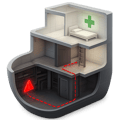
Compartment & Hatch Access
Galley scalding on Lower Deck 2 → Infirmary located on Deck 8. Engine-room shaft alley failure → Watertight doors dog-latched.
The obstacles: Vertical ladder wells, dog-latched scuttles, narrow companionways, and fire doors impede rapid transit.
The solution: Point-of-injury trauma staging deployed in forward machinery, galley, and bridge stations so equipment is reachable in under 60 seconds.
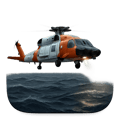
Extreme Blue-Water Isolation
Coast Guard MH-60 helicopter SAR operational radius is roughly 300 NM. Beyond flight range, or during gale-force sea states, air ambulance assets are grounded.
The reality: Vessel diversion takes hours. External medical evacuation is delayed. Casualties require multi-hour prolonged casualty management.
The solution: Standardized Tier 2 and Tier 3 marine trauma caches capable of managing hemorrhagic shock, severe burns, and hypothermia for 24+ hours.
Maritime Duty of Care
- Jones Act (46 U.S.C. § 30104): Fault-based negligence action for seafarers injured due to deficient equipment, delayed medical response, or inadequate crew training.
- Maintenance & Cure: Independent, no-fault maritime obligation to provide medical treatment and living expenses until maximum cure is reached.
- Unseaworthiness Doctrine: Strict-liability doctrine under general maritime law requiring vessel owners to furnish a ship, crew, and medical appliances reasonably fit for intended service.
- MLC 2006 & USCG 46 CFR: Prescribed statutory standards for shipboard medical chests and emergency lifesaving equipment by vessel class.
The legal reality: Courts evaluate shipboard readiness and inspection documentation across negligence, no-fault care, and unseaworthiness when injuries occur at sea.
Engine-Room Steam Failure • Sea State 6 • 180 NM Offshore
High-pressure steam rupture and rotational crush injury in lower machinery space. Scuttle hoisting required. Rotary SAR grounded due to weather.
Does your crew have the specialized burn sheets, arterial tourniquets, and vertical hoist litters to sustain life until port arrival?

Maritime MARCH Protocol
Evidence-based tactical medicine revolutionized survival by treating preventable causes of death in priority order. At sea, we apply the identical MARCH sequence, hardened against salt air corrosion, extreme humidity, companionway constraints, and multi-hour evacuation horizons.
Arterial tourniquets (C-A-T® Gen 7), QuikClot® hemostatic gauze, and high-pressure wound packing for high-pressure line ruptures and catastrophic trauma.
Nasopharyngeal airways (NPAs), mechanical suction, and horizontal recovery positioning during vertical hatch hoists.
Vented chest seals for penetrating puncture wounds and blast fragments; tension pneumothorax decompression protocols for trained shipboard medics.
Pelvic binders for machinery crush trauma, radial pulse monitoring, permissive hypotension targets, and telemedically directed holding care.
Immersion hypothermia wraps, reflective thermal barriers, and specialized hydrogel burn sheets to halt thermal injury in engine spaces.
Strategic Bulkhead Placement for 60-Second Reach
Trauma care fails if equipment is locked in a distant shipboard hospital. Every deck compartment requires designated, uninhibited medical access.
| Deck Compartment | Staged Kit Configuration | Operational Requirement | Core Medical Capability |
|---|---|---|---|
| Bridge & Operations | Tier 1 • Watchstander | Immediate grab-and-go access during alarms | Arterial tourniquet, compressed hemostatic gauze, vented chest seal, trauma shears |
| Machinery & Engine Spaces | Tier 2 • Bulkhead Burn Station | High-pressure injection, flash steam, rotating parts | Hydrogel burn blankets, dual tourniquets, eyewash washouts, extremity splinting |
| Weather Decks & Tenders | Tier 2 • Watertight IP67 Pack | Salt-spray, open watercraft, tender transfers | Hermetic roll-top dry bag, floating lanyard, marine trauma dressings, hypothermia bag |
| Corridors, Atriums & Galleys | Tier 2 • Public Access Station | 60-second public and crew reach co-located with AEDs | Wall-mounted rapid-pull IFAKs, compressed trauma dressings, shears, triage markers |
| Infirmary & Hospital Locker | Tier 3 • MCI Vault & Litters | Mass casualties, scuttle hoisting, helicopter hoist | Sked® vertical hoist rescue system, bi-fold NATO litters, 8+ tourniquet vault, prolonged care reserve |
The Universal Three-Tier Maritime Standard
Standardized shipboard medical readiness: crew on-body carry, watertight deck emergency stations, and vessel casualty evacuation systems.
Compact, corrosion-resistant trauma packs carried by shipboard security leads, deck officers, and marine response personnel.

Lightning-X MOLLE Sanitätertasche
- MOLLE-compatible tactical pouch for shipboard security duty belts
- High-durability water-resistant nylon with drain grommets
- Rapid zipper access with internal elastic retention loops
Best For: Roving deck security, shipboard safety officers, and crew leads.
View Specifications →
Elite Bags SAILS Wasserdichte Erste-Hilfe-Taschen
- 100% waterproof tarpaulin dry bag designed for maritime and open-deck spray
- Roll-top hermetic seal protects sterile dressings from salt air and sea spray
- Bright visibility exterior allows instant visual identification in low light
Best For: Tender boat crews, open promenade deck staff, and pool deck teams.
View Specifications →
MED-TAC Immediate Trauma Kit w/Pouch
- Rapid deployment pull-tab system for acute bleeding and puncture wounds
- Compact chassis that stays out of the way during routine shipboard duties
- Includes field-proven arterial tourniquet, hemostatic gauze, and compression bandage
Best For: Engine room technicians, galley managers, and dockside handlers.
View Specifications →Watertight, weather-sealed medical response kits staged at pool decks, gangways, tenders, and bridge stations.

MARINER Reaktionskit
- Configured specifically for offshore marine emergencies and maritime trauma
- Weather-resistant outer bag with high-visibility reflective identifiers
- Comprehensive supplies for near-drowning resuscitation and severe lacerations
Best For: Promenade decks, bridge wings, and life-boat boarding stations.
View Specifications →
Amphibisches Trauma-Kit
- Submersible, floatable marine trauma system engineered for watercraft deployment
- Pressure-equalized purge valve protects contents against extreme salt air exposure
- Includes advanced hypothermia management, burns, fractures, and arterial care
Best For: Tender craft, zodiac excursions, and guest water-sports operations.
View Specifications →
Wasserdichtes maritimes Trauma- und Erste-Hilfe-Set
- Crushproof, dustproof, and watertight hard-shell case with stainless hardware
- Built to withstand heavy open-ocean conditions and continuous UV radiation
- Full medical center satellite layout organized for rapid shipboard response
Best For: Open weather decks, gangway stations, and shipboard infirmary caches.
View Specifications →Shipboard casualty evacuation systems, confined space rescue litters, and helicopter medevac transfer platforms.

Hilfsausrüstung für Marineboote
- High-capacity marine trauma bag designed for small rescue boats and work tenders
- Modular interior allows rapid distribution of triage materials to injured passengers
- High-visibility waterproof materials resist grease, salt, and deck chemicals
Best For: Rescue boats, safety response craft, and offshore transfer teams.
View Specifications →
Sked® Basic Rettungssystem - International Orange
- The worldwide gold standard for shipboard vertical hoisting and stair navigation
- Rolls up compactly for transit through narrow ship ladders, hatches, and bulkheads
- US Coast Guard approved for helicopter winch operations and hoist extractions
Best For: Shipboard engine room extraction and helicopter medevac transfers.
View Specifications →
RAVEN Modell 90C Zweifach faltbare Trage
- Heavy-duty bi-fold tactical litter tested to stringent NATO evacuation standards
- Folds in half for compact corridor wall staging and quick elevator transport
- Ergonomic rubber handles and non-slip antimicrobial fabric for marine safety
Best For: Guest corridor evacuation, stateroom extractions, and infirmary transfers.
View Specifications →Beyond Compliance: The Operational Case for Maritime Trauma Readiness
Medical capability at sea is not just regulatory risk mitigation. It directly impacts crew retention, passenger confidence, and severe incident survival.
Crew Retention & Morale
Seafarers and offshore technicians operating hazardous machinery know when their vessel lacks adequate emergency gear.
- Standardized gear demonstrates tangible organizational duty of care.
- Drastically reduces turnover across licensed engineers and deck officers.
Passenger & Client Trust
Passengers and corporate charter clients observe how shipboard crew respond to public-deck medical crises.
- Rapid, disciplined crew intervention reassures guests during high-stress events.
- Prevents panic and protects vessel and fleet brand reputation.
Mitigating Lethal Shock
In massive arterial trauma or cold-water immersion, minutes dictate whether shock becomes irreversible.
- 60-second bulkhead access stops bleeding before circulatory collapse.
- Early thermal insulation halts the lethal hypothermia triad at sea.
Maritime Liability Defense
Admiralty law places rigorous standards on shipowners regarding seaworthiness and maintenance and cure.
- Documented quarterly inspection grids prove diligent readiness compliance.
- Provides defensible documentation against Jones Act negligence and unseaworthiness claims.

Maritime Duty of Care & Mass Casualty Readiness
Comprehensive fleet readiness requires both executive risk management and deck-level tactical doctrine. Access MED-TAC's complete two-part maritime emergency medical suite: the Executive White Paper (MED-WP-MAR-002) for fleet risk managers and DPAs, alongside the Operational MCI Protocol (MTC-MAR-001) for shipboard clinical and damage-control teams.
Managing prolonged casualty care (PCC) planning horizons, 6–72 hour severe sea state holds, and TMAS telemedical consultation.
Step-by-step 28-inch scuttle hoisting, companionway maneuvering, and flexible roll-litter protocols for shipboard confined spaces.
Distinguishing Jones Act negligence, no-fault maintenance & cure, and general maritime unseaworthiness strict liability.
178 total fillable form fields across both documents: 8-field vessel registration blocks, quarterly audit grids, and 60-second shift walkarounds.
Executive White Paper: Fleet Medical Readiness
- 150–300 NM SAR medevac horizons & 4-hour turning point
- Jones Act negligence, maintenance & cure, and unseaworthiness
- Vector TMAS telemedical consultation & PFC decision tree
- 8-field vessel registration block & quarterly audit sign-off
Operational Standard: Shipboard MCI Protocol
- 28-inch scuttle hoisting & flexible wrap litter extrication
- Item-level BOMs for Tier 1, Tier 2, and Tier 3 marine vaults
- IP67 salt-spray protection & hydrogel degradation defense
- 60-second shift-change walkaround & compartment logs
Request Your Fleet Medical Readiness Sourcing
Vessel Assessment • Bulkhead Placement • Evidence-Based Protocol • Tailored Fleet Procurement
What Sourcing & Readiness Review Covers
Veteran-Led Medical Authority • Engineered for Blue-Water Operations
Physician & Medical Educator
MARCH & Prolonged Care
Net 30 Verified Operators
Quotes valid 45 days. Net 30 payment terms available for verified government maritime agencies, public authorities, and verified commercial marine operators.
Request Sourcing & Operational Proposal
Frequently Asked Questions
Clear answers on shipboard trauma staging, compliance standards, training protocols, and fleet procurement.
Standard marine medicine chests (e.g. WHO Scale A/B/C) are designed for routine clinic complaints and stocked in a central infirmary. When an emergency happens in the engine room or on a wet deck, fetching supplies from the infirmary takes 8 to 20 minutes.
MED-TAC solves the point-of-injury access gap by engineering a 3-tier decentralized standard:
- Tier 1 Watchstander IFAKs: Carried on-body by duty officers, bridge watch, and security.
- Tier 2 Compartment Stations: Bulkhead-mounted in machinery spaces, galleys, and weather decks within 60-second reach.
- Tier 3 MCI Vaults & Litters: Watertight multi-casualty reserve and Sked® vertical companionway extrication systems.
Yes. All Tier 1 and Tier 2 kits are configured specifically for high-stress, gross-motor deployment by non-clinical mariners. We utilize intuitive color-coded modular packaging, pictographic instructions, and windlass arterial tourniquets that operate reliably even with wet, gloved, or oily hands.
Additionally, our kits align directly with the step-by-step procedures outlined in the Maritime & Offshore MCI Protocol (MTC-MAR-001), enabling any crew member to stop catastrophic arterial bleeding and manage airway compromise before medical staff arrive.
It exceeds statutory baselines. Traditional maritime regulations require medical supplies on board but leave placement and rapid-access strategy vague.
| Statutory Framework | Mandate | MED-TAC Operational Advantage |
|---|---|---|
| MLC 2006 Reg. 4.1 | Health protection and medical care at sea | Decentralized 60-second bulkhead access across crew work spaces |
| USCG 46 CFR | Lifesaving and first aid gear by vessel class | IP67 watertight, corrosion-resistant enclosures engineered for salt spray |
| Jones Act (46 U.S.C. § 30104) | Duty of "prompt and adequate" care | Documented quarterly inspection grids proving diligent seaworthiness |
MED-TAC publishes a two-part maritime medical readiness publication suite developed under the clinical direction of founder Marco R. Torres, MD, NRP (physician and medical educator, U.S. Navy veteran, flight medic, and founder of ALKEONHealth.com):
- Executive White Paper (MED-WP-MAR-002 Rev 1.0 • 10 Pages): Executive policy layer for fleet medical directors, DPAs, and risk managers covering 150–300 NM SAR envelopes, TMAS telemedicine decision trees, maritime duty of care under the Jones Act, maintenance & cure, and unseaworthiness, plus an 8-field vessel block and quarterly audit page.
- Operational MCI Protocol (MTC-MAR-001 Rev 1.0 • 16 Pages): Technical standard covering vertical companionway hoisting through 28-inch scuttles, high-pressure steam scalds, compartment staging, and item-level Tier 1–3 bills of materials (BOMs).
Both publications can be reviewed and downloaded at /pages/maritime-mci-protocol.
As a Service-Disabled Veteran-Owned Small Business (SDVOSB, CAGE: 9VFL3, UEI: YU3ZMJ44REA5), MED-TAC provides dedicated B2B and institutional sourcing:
- Payment Terms: Net 30 terms for verified government maritime agencies, public authorities, and verified commercial marine operators. 100% upfront for private purchasers.
- Quote Validity: Formal institutional quotes are valid for 45 days with guaranteed pricing.
- RFQ Channels: Submit directly via the form on this page or visit our dedicated B2B Quote Request Portal.
Maritime readiness requires continuous vigilance. We provide scheduled fleet restock replenishment packages, lot expiration tracking, and replacement modules for sterile consumables (chest seals, hemostatic gauze, burn dressings).
Vessel safety officers can utilize the standardized quarterly inspection checklist in MTC-MAR-001 to conduct quick 60-second shift-change audits and order pre-configured restock modules before port arrival.
Essential Maritime Readiness Resources
Access dedicated marine product collections, download official shipboard clinical standards, or connect with our procurement division.
Maritime & Marine Catalog
Browse our dedicated collection of IP67 watertight trauma cases, boat kits, waterproof dry bags, and severe weather marine medical gear.
Maritime Standards Suite
Download the Executive White Paper (MED-WP-MAR-002) and 16-page Operational Protocol (MTC-MAR-001) covering blue-water care, duty of care, and audit grids.
B2B Fleet RFQ Portal
Rapid 24-hour turnaround quotes, custom vessel BOM staging, and Net 30 terms for verified commercial fleet operators and maritime agencies.
SIMBODIES® Simulation
Ultra-realistic medical simulation trainers and task simulators for shipboard drills, confined-space extrication, and maritime crew training.