


An Individual First Aid Kit (IFAK) is a compact, personally carried trauma kit designed to treat the three preventable causes of preventable death from traumatic injury: massive hemorrhage, airway compromise, and tension pneumothorax. A complete IFAK contains a tourniquet, hemostatic gauze, chest seals, a pressure dressing, trauma shears, nitrile gloves, and a survival blanket — organized around the MARCH protocol (Massive Hemorrhage, Airway, Respiration, Circulation, Hypothermia).
Three preventable causes of traumatic death can be addressed in the field with the right gear and training. An IFAK puts that gear on the individual — where seconds matter, before emergency medical services arrive. This guide breaks down every component, explains why each item is included, and shows you what to look for when building or buying a kit.
SDVOSB Owned & Operated
Medical SME Veteran-Led
Evidence-Based Trauma Solutions
Designed & Assembled in the USA
By the MED-TAC International Editorial Team | Last updated: June 2026
What Does IFAK Stand For?
IFAK stands for Individual First Aid Kit. It is a standardized set of life-saving medical supplies carried by an individual for self-aid or buddy-aid in a trauma emergency. The concept originated in military medicine, where every warfighter carries one to address preventable causes of death on the battlefield.
The IFAK exists because of a hard-learned lesson: most trauma deaths occur before reaching a medical facility. According to military medical studies, the three preventable causes of death after traumatic injury are:
- Massive hemorrhage — uncontrolled bleeding from extremity wounds (the single largest preventable cause).
- Airway compromise — blockage of the airway preventing breathing.
- Tension pneumothorax — trapped air compressing the lungs, addressed with chest seals.
An IFAK gives you the tools to address all three. It is not a standard first aid kit — it is a trauma kit, purpose-built for life-threatening bleeding and breathing emergencies.
IFAK vs. AFAK vs. MFAK: What's the Difference?
These three kit types serve different carriers and scenarios. Understanding the distinction helps you choose the right level of gear for your role.
| Feature | IFAK (Individual) | AFAK (Advanced) | MFAK (Medic) |
|---|---|---|---|
| Who carries it | Every individual — military, LE, civilian | Team leaders, designated responders | Combat medics, tactical medics, EMS |
| Contents | Basic MARCH gear: tourniquet, gauze, chest seals, pressure dressing | IFAK contents + advanced airway, extra hemostatics, cric kit | Full MARCH + surgical airways, IV/IO, multiple tourniquets, drug kit |
| Best for | Self-aid, buddy-aid, everyday carry | Small unit leaders, squad-level care | Dedicated medical providers in the field |
| Training required | Stop the Bleed, basic MARCH | TCCC/TECC, advanced airway | Military medic / paramedic certification |
Key takeaway: An IFAK is for everyone. If you carry only one trauma kit, make it an IFAK. AFAK and MFAK kits are force multipliers for trained providers operating in higher-threat environments.
The MARCH Protocol: The Framework Behind Every IFAK
Every item in an IFAK maps to the MARCH protocol — the standardized sequence for evaluating and treating traumatic injuries. MARCH stands for:

Massive Hemorrhage
Tourniquets & hemostatic gauze

Airway
Nasopharyngeal airway & positioning

Respiration
Chest seals for penetrating wounds

Circulation
Pressure dressings & IV fluids

Hypothermia
Survival blanket & prevention wrap
The sequence matters. Massive hemorrhage kills fastest — within minutes — so it is addressed first. The protocol then moves systematically through each life threat in priority order. Every component in a well-built IFAK corresponds to one or more steps in this sequence.
The Complete IFAK Contents List
Below is every essential component of a complete IFAK, organized by MARCH priority. Each section explains what the item is, why it belongs in your kit, and what to look for when purchasing.
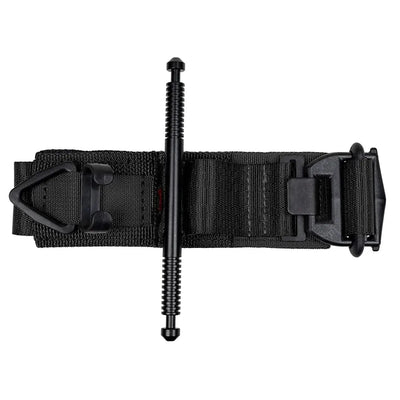
1. Tourniquet (M — Massive Hemorrhage)
What it is: A mechanical device that constricts blood flow to a limb, stopping life-threatening arterial bleeding from arms or legs. It is the single most important item in your IFAK.
Why it's in your IFAK: Extremity hemorrhage is the #1 preventable cause of traumatic death. A properly applied tourniquet can stop arterial bleeding in under 60 seconds. Without one, a person can bleed to death from a single limb wound in 3–5 minutes.
What to buy: Only two windlass tourniquets are recommended by the Committee on Tactical Combat Casualty Care (CoTCCC): the CAT Gen 7 and the SOF-T Tactical Tourniquet. Avoid imitations — counterfeit tourniquets have a documented history of failing under load.
2. Hemostatic Gauze (M — Massive Hemorrhage)
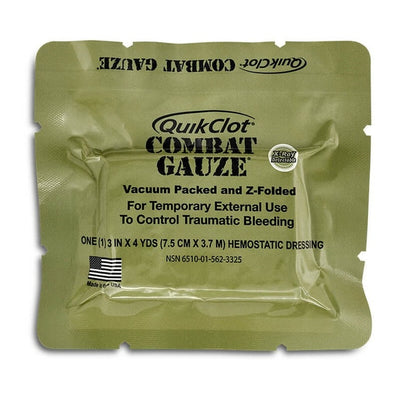
What it is: Gauze impregnated with a hemostatic agent that accelerates blood clotting. It is packed directly into wounds where a tourniquet cannot be applied (junctional areas, torso, neck).
Why it's in your IFAK: Tourniquets only work on limbs. For bleeding in the groin, armpit, neck, or torso, hemostatic gauze is your primary tool. It is packed into the wound, held with pressure, and promotes rapid clot formation.
What to buy: CoTCCC-recommended options include QuikClot Combat Gauze (kaolin-based) and ChitoGAUZE XR PRO (chitosan-based). Both are proven in combat and civilian settings.

3. Chest Seals (R — Respiration)
What they are: Adhesive occlusive dressings designed to seal penetrating chest wounds. Vented chest seals feature a one-way valve that lets trapped air escape while preventing air from entering.
Why they're in your IFAK: A penetrating chest wound can allow air into the chest cavity, causing a tension pneumothorax — a life-threatening condition where the lung collapses and pressure builds against the heart. Vented chest seals address this by sealing the wound while allowing trapped air to vent.
What to buy: HyFin Vent Chest Seals are the CoTCCC-recommended standard. Always carry at least two — one for the entry wound and one for a possible exit wound. Twin packs are ideal.
4. Pressure Bandage / Trauma Dressing (C — Circulation)
What it is: A multi-functional dressing that combines a sterile pad with an elastic wrap and pressure bar. It allows one-handed application of sustained pressure over a wound.
Why it's in your IFAK: After a tourniquet is applied or hemostatic gauze is packed, a pressure bandage secures the dressing and maintains pressure. It is also your primary tool for managing non-arterial bleeding that does not require a tourniquet.
What to buy: The Israeli Bandage (also called Emergency Trauma Dressing or ETD) is the standard. A 6-inch version covers most traumatic wounds. Look for vacuum-sealed packaging for field durability.

5. Trauma Shears
What they are: Heavy-duty scissors designed to cut through clothing, webbing, leather, and seatbelts quickly. Trauma shears feature blunt tips to prevent accidental injury to the patient while cutting away clothing to expose wounds.
Why they're in your IFAK: You cannot treat what you cannot see. Shears allow rapid exposure of wounds by cutting away clothing, uniforms, or gear. Every second spent fumbling with zippers or buttons is a second of bleeding.
What to buy: Standard 7.5-inch trauma shears with a blunt tip. Look for models with a carbide edge for durability.
6. Nitrile Gloves
What they are: Medical-grade nitrile examination gloves that provide a barrier against bloodborne pathogens.
Why they're in your IFAK: Protection for both the provider and the patient. When treating traumatic wounds, you will be in contact with blood and bodily fluids. Nitrile gloves reduce the risk of infection and cross-contamination. Always carry at least two pairs — gloves tear, and you may treat more than one casualty.
What to buy: Medical-grade nitrile gloves in a compact, individually wrapped format for IFAK use. Browse IFAK-compatible gloves →
7. Survival Blanket / Hypothermia Prevention (H — Hypothermia)
What it is: A compact, heat-reflective blanket (also called a Mylar blanket or emergency blanket) that retains body heat. Some kits use a more durable Hypothermia Prevention and Management Kit (HPMK).
Why it's in your IFAK: Trauma patients are at high risk for hypothermia — even in warm environments. Blood loss, shock, and exposure all contribute to dangerous drops in body temperature. Hypothermia worsens coagulopathy (the blood's ability to clot), creating the "lethal triad" of trauma: hypothermia, acidosis, and coagulopathy. A survival blanket is lightweight, costs almost nothing, and addresses a life threat that is easy to overlook.
What to buy: A standard emergency Mylar blanket is the minimum. For professional kits, consider a Ready-Heat blanket or an HPMK for active warming.
What Does NOT Belong in an IFAK
An IFAK is a trauma kit, not a general first aid kit. Carrying unnecessary items adds weight, bulk, and decision fatigue in an emergency. Here's what does not belong:
- Band-Aids and minor cut supplies — those belong in a separate boo-boo kit.
- Medications — pain relievers, antihistamines, and antibiotics require training and authority to administer. They belong in an AFAK or MFAK, not an IFAK.
- Splints and slings — musculoskeletal injuries are painful but rarely life-threatening in the first minutes. They can wait.
- Suture kits — wound closure is a delayed skill, not an emergency intervention. Field suturing without proper training increases infection risk.
- Snake bite kits — outdated and potentially harmful. Modern protocol is immobilization and transport.
Important: Your IFAK should contain only items that address life-threatening, preventable causes of traumatic death. If an item does not map to a MARCH priority, it does not belong.
How to Choose the Right IFAK
Your IFAK should match your environment, training level, and likely scenarios. Here's a practical breakdown:
| Scenario | What You Need | Recommended Kit |
|---|---|---|
| Everyday Carry (EDC) | Compact, pocket-sized kit with the essentials: tourniquet, gauze, chest seal, gloves | MED-TAC Premium Bleeding Control Kit |
| Vehicle Kit | Full IFAK with all MARCH components, stored in a durable pouch in the vehicle | MED-TAC Premium Trauma IFAK |
| Range / Training | Complete kit with multiple tourniquets, extra hemostatics, and chest seals | GO2FAS Gunshot Trauma Kit |
Prefer to build your own? Use our IFAK Kit Builder to assemble a custom kit component by component, with automatic bundle discounts at 5, 7, and 10 items.


Training Matters: A Kit Is Only as Good as the Person Carrying It
An IFAK is not a talisman. Without training, the best gear in the world sits unused while someone bleeds. At minimum, every person carrying an IFAK should complete a Stop the Bleed course — a free or low-cost program that teaches hemorrhage control in under two hours.
For professionals and those who want deeper competency, TCCC (Tactical Combat Casualty Care) and TECC (Tactical Emergency Casualty Care) courses provide the full MARCH protocol in a hands-on environment. These courses cover tourniquet application, wound packing, chest seal placement, and hypothermia prevention under stress.
Training and simulation products — including training tourniquets, manikins, and moulage kits — allow you to practice under realistic conditions without expending live medical supplies.
Explore training and simulation products →
HSA and FSA Eligibility
Many IFAK components and pre-built trauma kits are eligible for purchase with Health Savings Account (HSA) and Flexible Spending Account (FSA) funds. Eligible items typically include tourniquets, hemostatic dressings, chest seals, pressure bandages, nitrile gloves, and survival blankets.
Eligibility varies by plan and employer. We recommend verifying specific item eligibility with your HSA/FSA plan administrator before purchase.
View HSA/FSA eligible products →
Frequently Asked Questions
Build Your IFAK Today
You now know what goes into an IFAK and why. The next step is getting one in your hands. Choose a pre-built kit curated by medical and tactical professionals, or build your own component by component.
MED-TAC International
Service-Disabled Veteran-Owned Small Business (SDVOSB) | Medical SME Veteran-Led | Evidence-based trauma solutions aligned with CoTCCC, C-TECC, and MARCH protocols. Designed and Assembled in the USA. Free shipping on orders $200+ within CONUS. Free APO/FPO shipping, every order, no minimum.
Shopping cart
Leave a comment