0
Login Wishlist Quotes Cart 0
FREE SHIPPING $100+ | BUILD YOUR IFAK — SAVE 10% | APO/FPO ALWAYS FREE
★ SDVOSB  |  CAGE: 9VFL3  |  UEI: YU3ZMJ44REA5  |  SAM REGISTERED  |  MEDICAL SME VETERAN-LED

Tourniquets

Tourniquets

Tourniquets stop life-threatening limb hemorrhage — the leading cause of preventable death in trauma. Limb and junctional designs from the brands that field-tested them, including CoTCCC-recommended windlass and ratchet platforms.

Tourniquets are the M in MARCH. Pair with hemostatic gauze and wound packing for bleeding a tourniquet can't reach.

Tourniquet Selection Guide

The M in MARCH. Stop life-threatening limb hemorrhage in seconds. Shop by mechanism type -- each tile filters the grid below.

2 of 24 products

£35.00 – £43.00

Tourniquets stop life-threatening limb hemorrhage — the leading cause of preventable death in trauma. Limb and junctional designs from the brands that field-tested them, including CoTCCC-recommended windlass and ratchet platforms.

Tourniquets are the M in MARCH. Pair with hemostatic gauze and wound packing for bleeding a tourniquet can't reach.

How to Choose a Tourniquet

A tourniquet is a mechanical clamp on arterial flow. To work, it has to generate enough circumferential pressure to occlude the artery beneath the muscle — which is why width and a true mechanical advantage matter more than how tight you think you've pulled it. A narrow strap or an improvised band rarely reaches occlusion pressure and can worsen bleeding by trapping venous return while leaving arterial inflow open.

Limb vs. junctional

TypeMechanismUse
Limb — windlassRod twisted to tighten a wide strapArm and leg hemorrhage; the field standard
Limb — ratchetRatcheting buckle drives incremental pressureLarger limbs, gloved or low-dexterity application
JunctionalTargeted compression at the groin or axillaBleeding too proximal for a limb tourniquet

Application doctrine

  • High and tight — place on the proximal third of the limb, never over a joint, when the bleed is catastrophic or the site is obscured.
  • Tighten to no bleeding and no distal pulse — partial pressure that stops oozing but not the artery increases blood loss.
  • Second tourniquet if needed — place side-by-side and proximal to the first if one does not control the bleed.
  • Time-mark it — write the time of application; conversion is a later, protocol-driven decision.
Standardizing a program? Issue one proven tourniquet model and train to it — mixed inventories cost seconds under stress. Anchor selection and loadout with the trauma-response brief.

Why "CoTCCC-recommended" matters

The Committee on Tactical Combat Casualty Care evaluates tourniquets against survivability data and publishes a recommended list. A recommendation reflects field and laboratory performance — it is not an FDA approval or certification. Choosing from that list, and avoiding narrow improvised bands, is the single highest-yield decision in a bleeding-control loadout.

Frequently Asked Questions

What is the best type of tourniquet?

For limb hemorrhage, a CoTCCC-recommended windlass or ratchet tourniquet with a wide strap is the field standard. Width and a true mechanical advantage are what reach arterial occlusion; narrow or improvised bands often fail to stop arterial flow.

Where do you place a tourniquet?

Place it high and tight on the proximal third of the limb when bleeding is catastrophic or the wound site is unclear, and never directly over a joint. Tighten until bleeding stops and the distal pulse is gone.

Can you leave a tourniquet on too long?

Tourniquets can remain in place for a meaningful window; the priority is stopping the bleed. Always mark the application time and leave conversion or removal to protocol and medical direction, not guesswork.

Do I need a junctional tourniquet?

A junctional tourniquet addresses bleeding at the groin or axilla that is too proximal for a limb device. Agencies covering blast, gunshot, or high-energy trauma should consider one; many civilian kits do not require it.

Are these tourniquets CoTCCC approved?

CoTCCC issues recommendations, not approvals or certifications. The committee evaluates devices against survivability data and publishes a recommended list; this collection prioritizes those recommended designs.

Related collections

MED-TAC International Corp. is a clinician-founded, veteran-led tactical medicine provider. Product references to CoTCCC reflect committee recommendations and do not imply FDA approval or certification. This content is educational and is not a substitute for hands-on training or medical direction.

Counterfeit Tourniquet Warning

Counterfeit tourniquets are flooding the market through third-party sellers. These fakes use inferior materials that fail under pressure, costing lives when seconds matter. MED-TAC sources every tourniquet directly from authorized manufacturers and distributors -- including North American Rescue, TACMED Solutions, and XmetiX America. Every product ships from our USA-based headquarters with full traceability.

Tourniquet Intervention: Time is Life

Exsanguination from extremity hemorrhage is the #1 preventable cause of death in combat trauma. A properly applied tourniquet can stop life-threatening bleeding in under 60 seconds. The M in MARCH prioritizes massive hemorrhage control before airway management -- because a casualty can survive an airway compromise for minutes, but will die from uncontrolled arterial bleeding in 2-3 minutes. Aligned with CoTCCC and C-TECC guidelines.

Tourniquet Escalation Path
1
Limb Tourniquet

Apply a C-A-T or SOF-T high and tight, 2-3 inches above the wound. Never over a joint. Tighten until bleeding stops and distal pulse is eliminated.

2
Junctional Device

When bleeding is in the groin, axilla, or buttock where a limb tourniquet cannot be placed, use a junctional device like the LST or SAM Junctional.

3
Reassess & Convert

During prolonged field care, reassess every 2 hours. Consider conversion to a wound packing + pressure dressing if bleeding is controlled and evacuation is delayed beyond 2 hours.

Limb Tourniquets Windlass

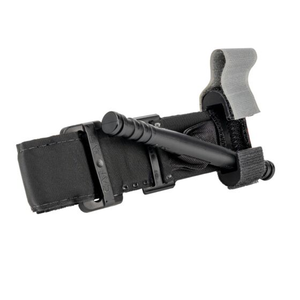
Windlass tourniquets are the CoTCCC-recommended standard for extremity hemorrhage. The C-A-T Gen 7 and SOF-T Wide use a mechanical windlass to generate circumferential pressure, occluding arterial flow. Ratchet tourniquets (TMT, M2, Xmetix TAK710) use a mechanical ratchet mechanism instead of a windlass -- providing precise, incremental pressure with one-handed operation. All limb tourniquets should be applied high and tight, 2-3 inches above the wound, and tightened until the distal pulse disappears.

  • C-A-T Gen 7: CoTCCC-recommended, windlass mechanism
  • SOF-T Wide: Windlass, all-aluminum construction
  • SAM XT: Ratcheting buckle, auto-lock system
  • TMT/M2: Ratchet tourniquets with incremental pressure
  • Xmetix TAK710: Dual-mode limb/junctional with pressure pin
Junctional & Proximal Junctional

Junctional hemorrhage occurs where the limb meets the torso (groin, axilla, buttock) -- areas where a standard limb tourniquet cannot be placed. The LST (Limb Salvage Tourniquet) is a dual-mode device that functions as both a limb tourniquet and a junctional device using a unique pressure pin mechanism for targeted femoral or axillary artery occlusion. The SAM Junctional and JETT provide pelvic stabilization with junctional pressure. These devices buy time for surgical intervention in PFC scenarios.

  • LST: Dual-mode limb/junctional with pressure pin technology
  • SAM Junctional: Pelvic stabilization + junctional pressure
  • JETT: Junctional Emergency Treatment Tool
  • Xmetix TAK710: Convertible to junctional mode
  • Designed for groin, axilla, and buttock hemorrhage
Training & Skills Train

Muscle memory saves lives. Under stress, fine motor skills degrade and cognitive processing slows. Regular tourniquet training builds the repetition needed to apply a C-A-T in under 30 seconds -- even in low-light, adverse weather, or while taking cover. Training tourniquets are functionally identical to operational models but marked with blue or orange identifiers. Use them for scenario-based training, self-application drills, and buddy application exercises. Never deploy a training tourniquet in a real casualty situation.

  • Blue/orange training models: Functionally identical to live
  • Practice self-application (strong and weak hand)
  • Drill buddy application under simulated stress
  • Train in low-light and adverse conditions
  • Never use training tourniquets on real casualties
Tourniquet Application Protocol: Apply, Document, Reassess
1

Apply high and tight. Place the tourniquet 2-3 inches above the wound, never over a joint. Pull the strap tight, then twist the windlass until bleeding stops and the distal pulse is gone. Secure the windlass in the clip. For ratchet tourniquets, click until the same endpoint is reached.

2

Document the time. Write the application time on the casualty's forehead with a marker. This is critical for evacuation handoff -- receiving facilities need to know tourniquet duration to manage reperfusion injury and timing of conversion. No documentation = no handoff.

3

Reassess and consider conversion. Check the tourniquet every 2 hours. If evacuation is delayed beyond 2 hours and bleeding is controlled, consider conversion to wound packing + pressure dressing. Never remove a tourniquet if the casualty is in shock, if the wound is still actively bleeding, or if conversion is not possible within 2 hours of application.

How Do Tourniquets, Hemostatic Agents, and Pressure Dressings Compare?

Understanding the role of each device category in the MARCH hemorrhage control sequence.

Device Category Primary Use Key Products CoTCCC Status
Limb Tourniquets Stop life-threatening extremity hemorrhage. Applied high and tight on the limb. The first step in MARCH for compressible limb bleeding. C-A-T® Gen 7, SOF-T® Wide, TMT®, SAM XT®, XmetiX TAK710 Some Recommended
Junctional / Proximal Devices Control non-compressible junctional hemorrhage (groin, axilla) where a limb tourniquet cannot reach. Used when direct pressure and packing are insufficient. LST™ Dual-Mode, JETT®, SAM® Junctional, AAJT-S Any FDA-Approved
Pressure Dressings Sustained, hands-free compression over a packed wound. Holds a clot in place while you move to the next injury. Does not replace wound packing. HEMGUARD, Emergency Trauma Dressing (ETD), ACE Wrap, Israeli Bandage Not Separately Reviewed
Hemostatic Agents Promote rapid clotting in wound cavities that tourniquets cannot address. Packed directly into the wound with at least 3 minutes of direct pressure. Combat Gauze, Celox Gauze, ChitoGauze, XStat Some Recommended

CoTCCC alignment or lack thereof does not infer anything about a product's quality or effectiveness. No CoTCCC tourniquet review has been conducted since 2019, and there are no plans for future reviews. In December 2021, CoTCCC removed specific product recommendations for junctional tourniquets, directing end users to select any FDA-approved device indicated for junctional hemorrhage control. Always review the totality of modern product evidence and do not rely on a single data point to make purchasing decisions. FDA and CE compliant where applicable per manufacturer specifications. This comparison table is not all-inclusive and is subject to expansion or retraction at any time. MED-TAC does not claim to offer every tourniquet option on the market.

Evidence-Based Selection
CoTCCC Aligned
SDVOSB Certified
500+ Agencies
4.83 / 5 · 750+ Verified Reviews

We offer best-in-class products from every manufacturer, so you have variety and choice in the gear you need to save lives.

CoTCCC Aligned SDVOSB Certified SAM Registered 500+ Agencies Served Stop the Bleed

Why MED-TAC's Evidence-Based Approach Outperforms Single-Vendor Kits

Independent Testing, Not Marketing Claims

Each component is selected based on published clinical studies, field performance data, and professional user feedback -- not manufacturer marketing. We evaluate the entire equipment ecosystem, including the 90% of effective gear often missed by limited single-vendor review scopes.

Multi-Brand Curation Over Compromise

Single vendors excel in one category but underperform in others. We select the best tourniquet from one brand, the superior hemostatic from another, the top chest seal from a third -- optimizing kit performance over vendor politics. Result: 13% higher effectiveness vs. single-vendor averages.

Professionally Validated & Compliance Ready

Components align with Stop the Bleed, C-TECC, and MARCH protocols. Government procurement documentation, competitive bidding support, and GSA schedule compatibility available. Component traceability and assembly quality control on every kit.

500+
Law Enforcement Agencies
250+
EMS Departments
1,000+
Corporate Programs
50K+
Individuals Trained
Shopping cart

Your cart is empty.

Return to shop
Link copied to clipboard